
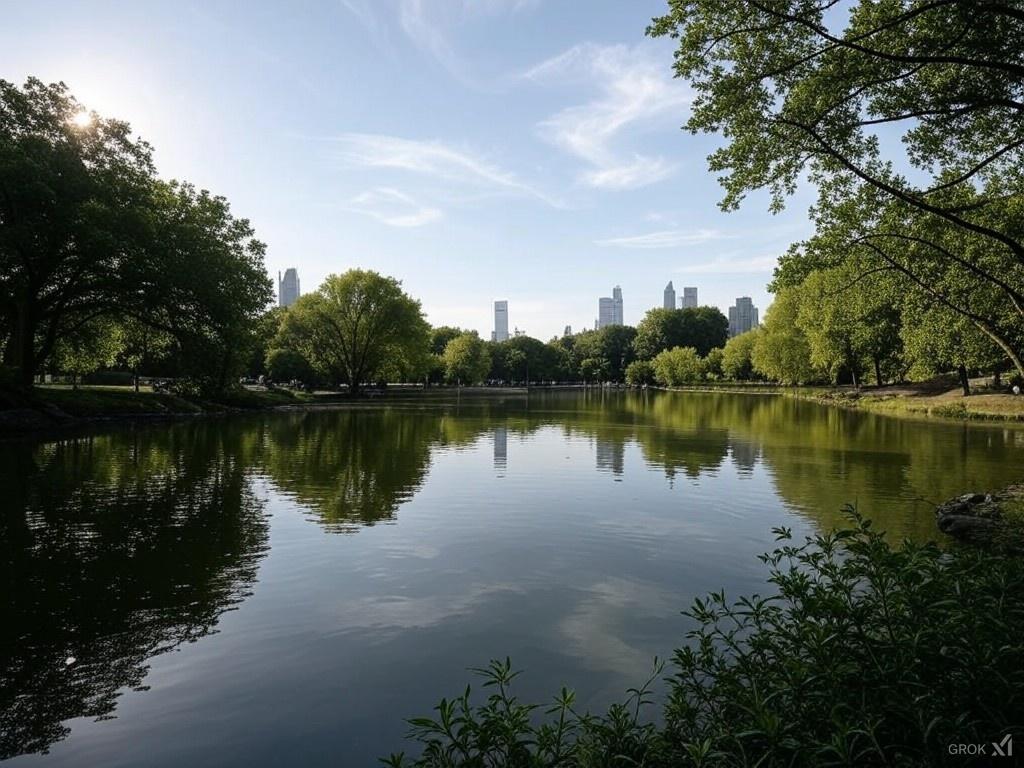
Revisiting the Central Park
To lay claim to penning anything new about New York’s Central Park would be at the least, a boisterous endeavor, or for those kind enough–just naïve. 150 years after its establishment, many people still have a hard time believing that the park was man-made, conceived, and sculpted into the haven of green and tranquillity in the heart of the bustling city it is today. Nonetheless, I yearned to write about mega park projects, and in Central Park, the ideal muse gleamed, before I could indulge in anything else.
Central Park Impacts
The culmination of ambitious plans by ambitious landscape architects, Frederick Law Olmsted and Calvert Vaux, New York’s Central Park has become one of the most celebrated parks in the world. With 42 million visitors annually, the impact of this 843-acre Park is not limited to the conglomerate of businesses, events, and activities within its boundaries. Views from surrounding properties, overflow of visitors to neighbouring museums and restaurants, the gorgeous views from atop adjacent buildings, and the premium it adds on nearby properties, have made the park one of the most remarkable monuments of our time. The Central Park Conservancy reported that “in fiscal year 2014, proximity to Central Park added more than $26.0 billion to the market value of properties on the blocks closest to the Park…” Additionally, it is estimated that “sale prices for apartments along Fifth Avenue that have views of the Park exceed the price of apartments that don’t by an average of $1,239 per square foot.”
The journey to building this wonder was laden with problems. But Olmstead was used to challenges, and had developed a penchant for engaging in trying new things, including his stint as a travel writer, and as an anti-slavery writer. He had been outspoken in his views about slavery and other controversial issues before he started obsessing with urban reform projects and the design and conservation of Green Infrastructure in major metropolitan areas. From the beginning, sculpting this marvel was unsurmountable: a rocky and swampy ground, at an unimaginable scale, and hauling millions of cubic feet of cut-and-fill material would never be easy. Moreover, the project was beleaguered by the politics surrounding the displacement and compensation of inhabitants, and a tripling of the initial budget from $5 million to an eventual $14 million. The beautiful outcome has to be celebrated in light of these struggles.
Uhuru Park, Nairobi
Nairobi’s Uhuru Park is Kenya’s most famous park, officially opened to the public in 1969, although its precincts had been a critical green space for Nairobi, common for public gatherings. The name Uhuru, “freedom,” and subsequent development encapsulate the spirit of Kenya’s independence. To date, the park often adds a layer of importance to major political decisions and protests it hosts. Whether seeking solace from the city’s congestion, a moment of reflection after a job interview, or celebrating romance, the extensive lawns, trees, and shrubs, provide a serene setting for Nairobians.
Most prominent in the struggle for the protection of the park was Prof Wangari Maathai, the 2004 Nobel Peace Laureate. According to the Greenbelt Movement, in 1989, “Kanu government, under President Daniel arap Moi, planned to build a 60-storey tower and complex in Uhuru Park with room for the party’s headquarters, offices, shopping malls and parking for hundreds of cars.” Under the heavy clouds of fear in the Kanu era and massive intimidation that drove many of her friends to coil back quietly, she lodged a campaign of letter-writing, court action, and protests against the project until the plans were shelved in 1990 after the financiers withdrew in response to public outcry. To the Green Belt Movement, “That building would have been so intimidating, that even if some land in the small park remained, no one would have dared come near it.”
Disputations surrounding Uhuru Park continue, with the recent ones involving the impact of the Nairobi Expressway construction on the park. Kenyans still cannot doze off, assuming the place of Uhuru Park to the public as a settled issue. Today, Uhuru Park refers to the 32-acre park. However, the Green Belt Movement notes that, before the destructive plans in 1989, “the original size of the park had already been reduced by development: a hotel, a road, a members-only golf course, and a football stadium had all been built on parkland during previous years.” What happens to it in the future thus remains an unfinished page.
Gingko Trees and Conservation of Ancient Ways
In Tokyo, Jingu Gaien Park has been the centre of recent controversy due to the proposed felling and moving of trees, the replacement of a famous baseball stadium, and the construction of skyscrapers. A 323-acre complex consisting of a baseball stadium, a rugby pitch, and lush greenery, it is embedded in the hearts of local citizens and visited by millions from all over Japan and abroad.
In this part of the world, the change of leaf colour comes along with celebrations. The majestic 300-metre avenue creates a living archway of ginkgo trees that’s a landmark of the park especially in autumn. Against the backdrop of golden leaves, during the annual Gingko Festival, this avenue becomes a corridor of flavours and food artistry, with stalls lined up, creating an unforgettable visual and aromatic spectacle. The Tokyo Metropolitan Government sees this redevelopment as an opportunity to create a new sports hub and modernise the park. Unfortunately, the redevelopment project, costing $2.27 billion, restructures a famous site, disturbing a familiar citizens’ rhythm.
Shrinking of Space as Shrinking Rights
For Istanbul’s Taksim Square and adjacent Gezi Park, a very different set of values was at the centre of tussles in 2013. In addition to protesting against the removal of trees from a beloved park, in a city with few public spaces, a proposal for a commercial and cultural centre with a mosque on the site exposed old wounds in a portion of the citizenry. To many, the shrinking of the public open space, reduction of pedestrian entry points, and the proposed reconstruction of a barracks nearby were symbolic of government overreach, religious domination over secularism disagreements, and police brutality.
Conclusion
Mega parks have captured the public imagination across the globe, some breeding an idolised persona, and becoming irreplaceable elements of the public realm. More than any other human project, the public realm has the most stakeholders; they pull in different directions with the upside of preserving the identity of the existing space, and the downside of impeding even the minutest of transformations. Setting up new mega parks is one of the rarest endeavours for local governments.
The private sector’s expertise and efficiency in managing resources and raising capital have been embraced as a vehicle to drive infrastructure development across the globe. However, financing of park projects is still limited by the minuscule revenue compared to toll roads, airports, and power plants. Even for typical Infrastructure like roads, many potential funding partners including insurance and pension funds shy away because of low and slow rates of return, instead, preferring stocks and bonds. For many without these important facilities, the future is dim.
Recently, I was reading The Guardian’s Notes and Queries. The question was, “How much would Central Park be worth if it were to be sold off for construction?” Leave alone the near impossibility of this happening, the responses were intriguing. From $35 billion to $39 trillion, the staggering amounts speak of the immense value of this park. But the most priceless response, from someone who could not even dare imagine was this–it’s priceless.
Be grateful if the position of your favourite park is a settled matter in the national psyche. Many people across the world are still fighting to find this rest.

 Kestani
Leave a comment